Part of the Oxford Instruments Group
Expand
AZtec Software

AZtecCrystal 4.0

Next Generation EBSD Data Processing

AZtecCrystal is Oxford Instruments’ modern and innovative EBSD data processing software, designed for the new era of high-speed EBSD detectors and ever-expanding EBSD applications. First launched in 2019, AZtecCrystal has been continually developed ever since and now offers the accessibility and functionality to satisfy the novice and expert alike.

View Brochure Request Pricing

Perfect image correlation

Complete texture analysis

Full boundary characterisation

Instantaneous grain measurements

AZtecCrystal 4.0

AZtecCrystal is a comprehensive software package for processing data collected using electron backscatter diffraction (EBSD). It is designed to have the ease of use necessary for newcomers to the EBSD technique, yet to have the advanced tools required for in-depth materials characterisation and diffraction pattern reanalysis required by more experienced operators.

Interrogating EBSD datasets has never been easier. AZtecCrystal has an accessible user interface that is both intuitive and flexible. Whether you are an occasional EBSD user, requiring instant access to routine functionality, or an EBSD expert wanting to extract detailed microstructural information from your sample, AZtecCrystal is designed for you.

Whatever you require from your EBSD data analysis, AZtecCrystal is sure to deliver. New features for AZtecCrystal include:

STAMP

  • New ‘Stamp’ tool allows third party data to be added to the raw H5OINA files
  • This can be done automatically using data in the file name
  • External experimental data such Temp/Load/Extension parameters can be imported from multiple formats

Crystal Batch

  • Apply all the processing power of AZtecCrystal to hundreds of map layers in one easy step
  • For consistent and reliable data processing, ideal for Quality Control

Crystal Compare

  • Edit and visualize your data stack in one simple step
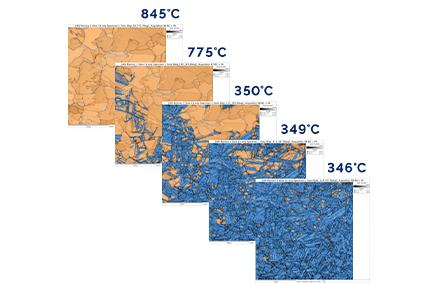
  • Link experimental parameters to specific maps layers for the first time
  • Capture the moment with Crystal Compare
Upgrade Now

Interrogating EBSD datasets has never been easier. AZtecCrystal has an accessible user interface that is both intuitive and flexible. Whether you are an occasional EBSD user, requiring instant access to routine functionality, or an EBSD expert wanting to extract detailed microstructural information from your sample, AZtecCrystal is designed for you.

Strain Analysis
Pattern Matching for routine strain analysis

Particle Analysis
Define the texture of each particle

MapSweeper - Pattern Matching
Dataset enhancement using simulated pattern matching indexing on stored EBSPs

Classification Tool
Machine-learning classification of microstructure constituents

AZtecCrystal uses the power of pattern matching to enhance your data. Solve unindexed points, refine the solution and push your analysis to the next level with MapSweeper. Correctly characterize similar phases, improve measurement of deformed materials, calculate lattice parameter ratios and strained regions and much more.

  • Intuitive interface with AZtec theming and shared layout concept
  • Multiple, user-selectable Viewing Modes to access the necessary analysis tools
  • Separate project tree and settings panels for simple data and tool management
  • Main workspace panes can be undocked for viewing on multiple monitors
  • User-selectable zooming for work on different screen resolutions
  • Simple switch between Data Analysis mode and MapSweeper data enhancement mode
  • Multiple language support
  • Map display in either tabbed or (linked) tile form
  • Multiple map interaction mode (including point and grain selection, profile measurement and subset creation)
  • Compact legend display, exportable with maps
  • Unlimited, customisable map creation using individual map layers – no limits to the number of layers in any map
  • Multiple map layers, each fully customisable, including:
      • Pattern quality and misfit
      • SEM image colours and values
      • Orientation colouring
      • Texture components
      • Strain and deformation (including GND density, Kernel Average Misorientation)
      • EDS element distribution
      • Grain size, shape, and internal orientation distribution
      • Grain / subgrain / phase boundaries
      • Special boundaries (including twins and coincident site lattice boundaries)
      • Orientation and lattice relationships
      • Dislocation and weighted Burgers vector information
  • Separate display of all individual map values and distributions
  • Misorientation profile analysis tool, with variable width and multiple component display
  • Map navigator, to show position relative to full dataset area
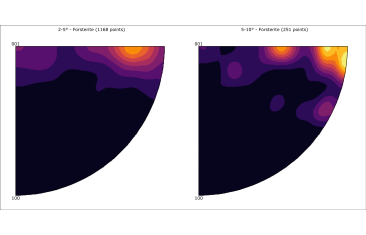
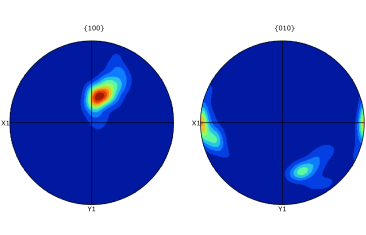
  • Full, customisable pole figure (PF) display
  • Full, customisable inverse pole figure (IPF) display
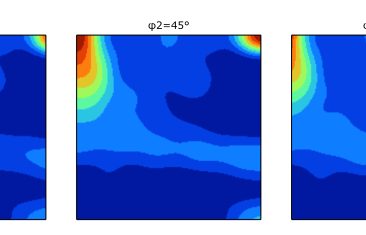
  • Full orientation distribution function (ODF) analysis
  • User-defined settings, including ODF calculation and display, density contouring, projection selection etc.
  • Pole plot calculation and display
  • Applied sample symmetry option
  • Data rotation to correct for sample mounting errors
  • User-defined grain size measurement
  • High-speed algorithms – 20,000 grains measured in < 15s
  • Multiple grain model displays
  • Grain size histogram display with arithmetic and area-weighted statistics
  • Grain size number given to ASTM E2627 standard
  • Filtered grain size list for advanced data subsetting
  • Twinned grain statistical analysis
  • Parameter correlation tool to identify relationships between grain-based measurements
  • Selection and display of any electron image from the same AZtec site of interest (e.g. forescatter, BSE or SE images)
  • EBSD map overlay with adjustable transparency
  • Comprehensive distortion correction to correct of drift during EBSD mapping:
    • Simple mode to correct for constant drift or distortion
    • Extended mode using co-localisation of features in the electron image and EBSD map
    • Correct EBSD data can be saved as a new dataset for subsequent analysis
  • Full EBSD pattern simulation using kinematical, 2-beam or many-beam dynamical models
  • Rapid image cross-correlation between experimental and simulated patterns
  • High accuracy calibration refinement tool
  • Pattern weighting or masking to improve matching for patterns with shadows or strong signal variations
  • Multiple “sweep” types:
      • Indexing sweep – full re-indexing using a novel dynamic template matching method
      • Refinement sweep – uses existing phase/orientation results to enhance data quality:
        • Orientation refinement
        • Pseudosymmetry correction (including measurement of crystal polarity)
        • Phase discrimination
        • Strain analysis
  • Repair sweep – corrects misindexed measurement errors and iteratively removes non-indexed points
  • Analyses use local pixel geometry calibration for improved precision
  • All analyses (except the “Indexing sweep”) can be carried out on a regular PC / laptop – no GPU required
  • Reanalysis speeds up to > 1000 Hz
  • Multiple applications – highly deformed materials, nanocrystalline samples, high-precision dislocation analysis, semiconductor polarity determination etc.
  • Find out more details about MapSweeper and application examples on ebsd.com.

The Latest Developments in EBSD Software

We discuss the developments to our EBSD acquisition and data processing including a new guided workflow in AZtecHKL to assist with setting up and running Transmission Kikuchi Diffraction experiments and a versatile new Parent Grain Analysis viewing mode within AZtecCrystal that enables rapid reconstruction of parent microstructures.

Approx View time: 7 minutes


AZtecCrystal Demonstration  

Watch our latest interactive demonstration of AZtecCrystal in order to understand the speed, flexibility, and intelligence of the most modern EBSD data processing software on the market today! 


Tutorial: Effective EBSD data processing using AZtecCrystalAZtecCrystal Demonstration


This tutorial will cover fundamental steps of data processing such as data cleaning and grain size measurement, as well as touching on more advanced analytical tools such as parent grain reconstruction and the calculation of elastic properties.

Approx View time: 26 minutes

Tailored For Your Key Applications

AZtecCrystal enables fast, high-throughput analyses of any EBSD dataset. Optimised for speed yet designed for ease-of-use, AZtecCrystal delivers the versatility of the EBSD technique for all levels of user expertise. The primary fields of application are as follows, but AZtecCrystal is ideally suited for any application of the EBSD technique:

Further Applications

The following are some applications where AZtecCrystal has been used to reveal new information:

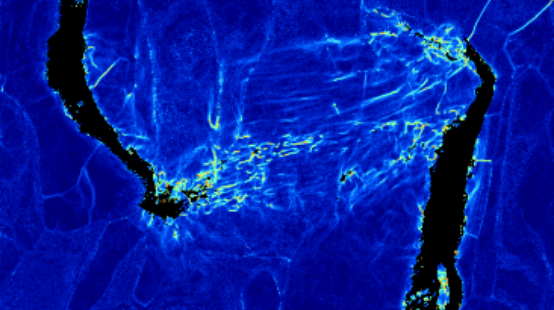
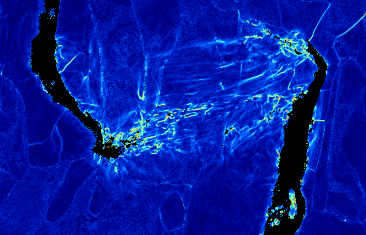
  • Understanding the propagation of cracks through materials is key to designing materials that are less likely to fail
  • AZtecCrystal provides multiple tools that enable researchers to study the build up of plastic strain at crack tips and to investigate the relationship between grain structure, orientation and crack propagation
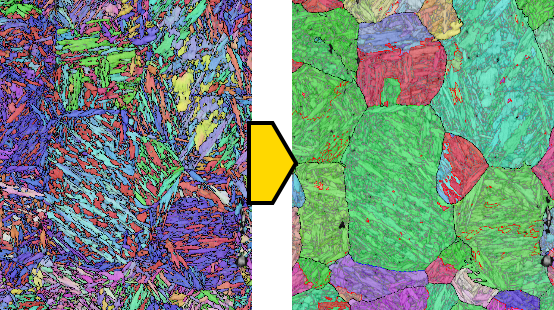
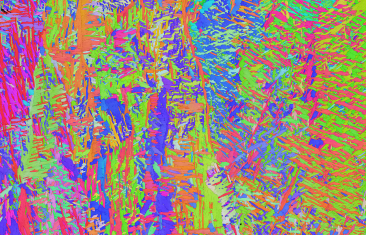
  • In many materials, such as martensitic steels and Ti alloys, understanding the parent grain microstructure is important as it has a strong influence on the final grain size and hence the resulting material strength
  • AZtecCrystal incorporates a comprehensive parent grain analysis tool that reconstructs the parent microstructure based on orientation relationships, enabling full analyses of the grain size, boundary characteristics and texture of the prior austenitic microstructure
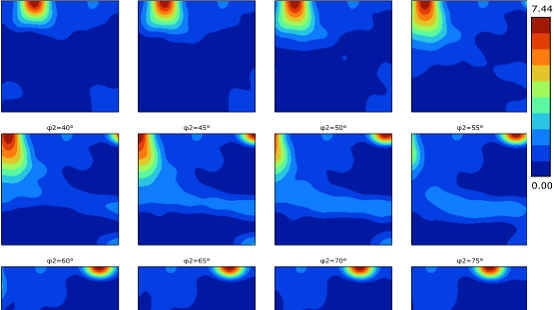
  • Texture – the preferred crystallographic orientation of grains – controls many key materials properties and is a critical measurement in most processed metals, such as rolled steel
  • AZtecCrystal offers all the necessary tools for measuring and assessing texture in materials – orientation distribution functions (ODFs), pole and inverse pole figures, customisable texture component maps and numerous ways to determine texture fractions
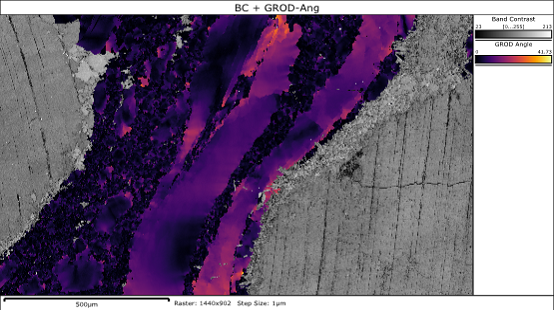
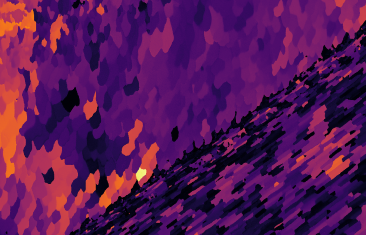
  • Understanding the response of rocks to stress and strain as well as to variations in temperature and pressure is essential for an understanding of the processes that control plate tectonics, cause earthquakes and result in ore mineral emplacement
  • AZtecCrystal delivers rapid results highlighting deformation processes either in map form or via more advanced approaches such as boundary disorientation analysis
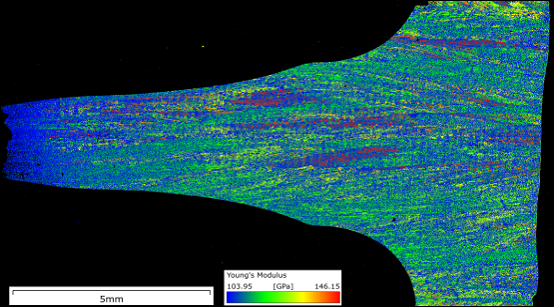
  • AZtecCrystal has a Materials Properties viewing mode that can calculate the elastic properties of materials based on each grain’s orientation
  • This allows researchers to instantly convert raw EBSD data into information about the key physical properties of materials, such as the relationship between build direction and yield strength in 3D printed Ti64 alloys
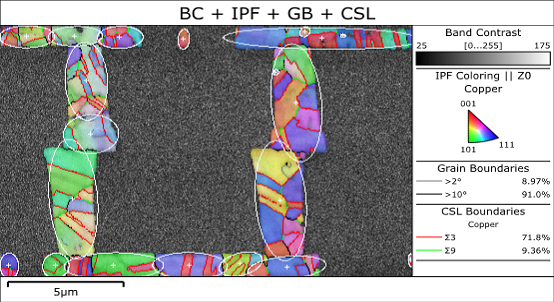
  • The electrical performance of components is closely linked to the distribution and nature of crystallographic boundaries between and within grains – controlling this is known as grain boundary engineering
  • AZtecCrystal enables rapid characterisation of boundary populations, determining the proportion of special boundaries (such as coincident site lattice boundaries) and true determination of grain sizes on the nanometre to micrometre scale

Learn More about AZtecCrystal

Image Gallery

Customer Publications